The Strategic Role of Wine Labeling in the Western Cape Export Economy
First Impressions: How Label Aesthetics Drive Premium Wine Sales
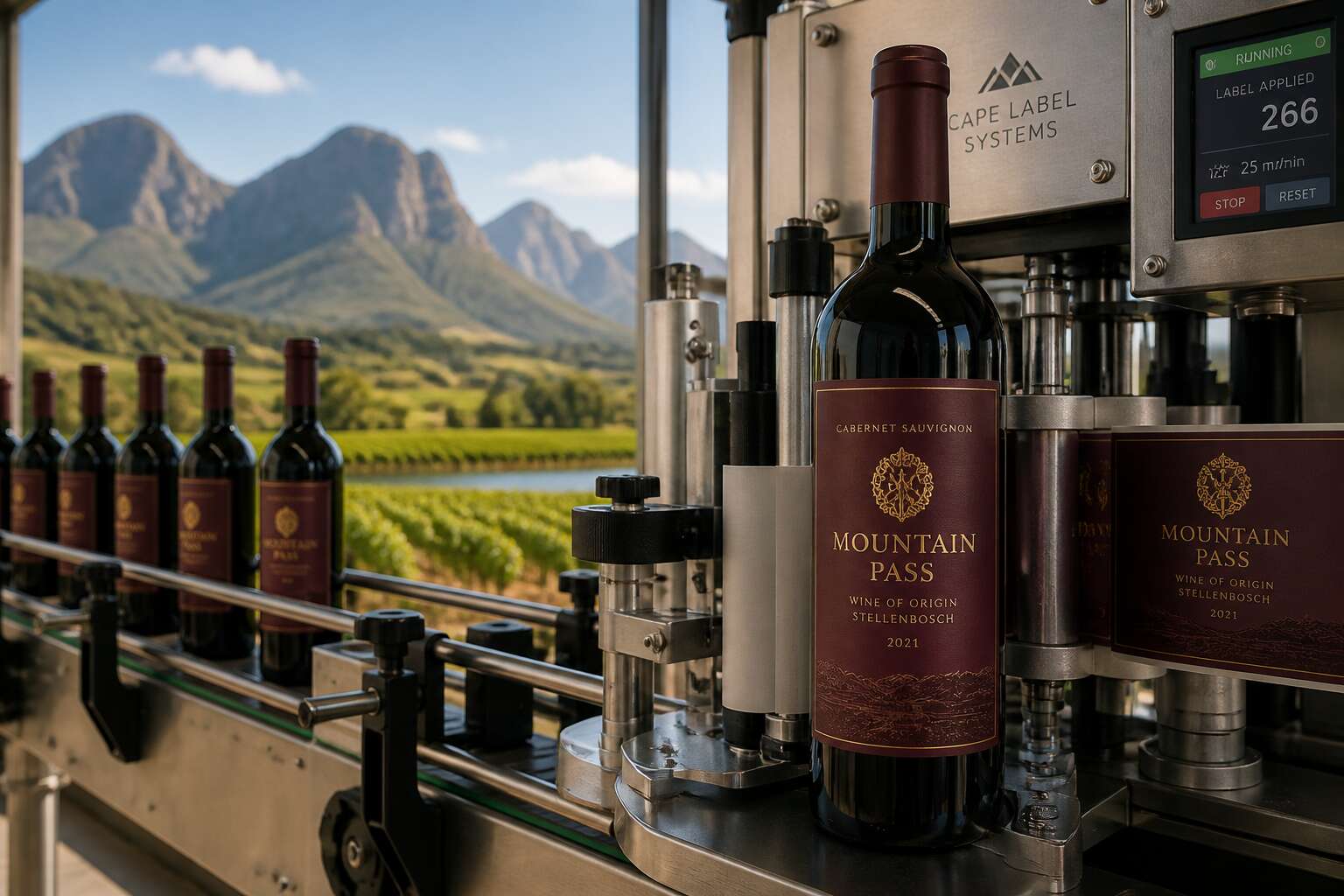
In the Western Cape, a wine bottle labeler western cape does more than apply paper to glass. It affixes the brand’s identity, which must survive customs, shelf scrutiny, and the discerning eyes of international buyers. For exporters, the label conveys the first commercial message, influencing premium placement in crowded overseas markets.
First impressions drive premium wine sales. A crisp, well-registered label signals quality before a single cork is pulled. Buyers in London or Tokyo judge a bottle within seconds, using visual cues to infer what lies inside. That is why producers invest in precision labeling equipment and material choices that resist moisture and abrasion.
- Foil stamping adds perceived luxury.
- Embossed textures suggest artisanal care.
- Minimalist designs command modern attention.
When export volumes rise, consistency becomes non-negotiable. A wine bottle labeler western cape ensures every batch meets the same standard, protecting brand equity across thousands of kilometers.
Regulatory Compliance and Label Accuracy for Global Markets
South African export volumes are measured in millions of litres each year. Within that flow of goods, one mistake on a label can stop an entire shipment at a foreign port. It is a costly delay. It is also avoidable.
Regulatory demands shift between markets. The EU wants specific allergen declarations. The US enforces strict sulfite warnings. Asian buyers require lot codes that trace back to the vineyard block. A wine bottle labeler western cape handles these variations through programmed software and precise print registration. The machine does not guess. It reads the data and applies the correct iteration every time.
Consider the common pitfalls that plague manual application:
1. Smudged ink that renders barcodes unscannable.
2. Crooked placement that obscures the health warning.
3. Wrong vintage stickers applied to the wrong pallet.
4. Peeling edges that trigger moisture inspections.
Each error represents a compliance breach. Each breach risks a rejected container. The modern labeling unit addresses these issues with pressure sensors and optical cameras that verify each bottle before it moves to the packing crate. This level of accuracy is a commercial requirement, not a technical luxury.
The human element remains vital for oversight, but the physical repetition belongs to the machine. When a labeler manages the adhesion, the alignment, and the batch coding, the producer gains a direct line to market access. The label becomes a legal document, accurate down to the millimetre. In this context, a wine bottle labeler western cape does not just serve the cellar. It serves the invoice, the freight forwarder, and the customs agent on the other side of the ocean.
Opertional Efficiency: Minimizing Downtime in the Bottling Plant
A bottling line that halts for thirty minutes can lose more than a thousand units of production. In a busy Western Cape cellar, that is not a rounding error. It is a full day’s loss squeezed into half an hour. I found that the most successful operations treat the labeling station as a bottleneck, not an afterthought. The wine bottle labeler western cape is the final gate before packaging and every jam, misalignment, or adhesive failure ripples backward through the entire plant.
The real cost of downtime is rarely the stoppage itself. It is the restart sequence. Operators must clear the line, inspect the partially labeled bottles, reset the sensors, and recheck the batch code. A labeler with predictive diagnostics changes that equation. It flags a low adhesive level or a worn roller before the fault becomes a hard stop. That shift from reactive repair to proactive maintenance is worth more than the machine’s purchase price.
A well-programmed system also shortens the changeover window between vintages. The unit remembers the label dimensions, the bottle profile, and the pressure settings. Recalibration takes seconds instead of hours.
– Replace the vacuum plates every six months.
– Calibrate the optical sensors at the start of each shift.
– Check the glue temperature twice during a run.
– Log every error code in the maintenance history.
These steps sound simple, but they extend the service life of the machine and keep the line in motion. When the wine bottle labeler western cape runs without interruption, the plant forecasts become reliable and the delivery schedule holds firm. That consistency is what buyers notice. It is what keeps the export orders flowing.
A Comprehensive Guide to Wine Labeling Mahinery and Tehnologies
Compact Semi-Automatic Labelers for Boutique Wineries
Each vintage season brings a quiet challenge to boutique wineries across the Western Cape: how to apply labels that reflect craft without slowing production. Compact semi-automatic labelers provide precision while retaining human control, making them a practical choice for smaller operations.
When exploring wine bottle labeler western cape options, compact semi-automatic models typically include:
- Adjustable glue rollers to accommodate various label sizes
- Simple changeover mechanisms for different bottle shapes
- Manual or footpedal operation for batch flexibility
In my experience, such a design allows winemakers to prioritize quality over speed! A reliable labeling operation in the Western Cape depends on equipment that handles artisanal production runs with consistent results.
Fully Automatic High-Speed Labeling Lines for Large Estates
When a harvest yields a hundred thousand bottles, the rhythm of the cellar changes. The quiet hum of a semi-automatic machine gives way to the commanding pulse of a fully automated line. For large estates in the region, the wine bottle labeler western cape operations rely on must keep pace with the relentless flow of glass and liquid. This is where high-speed machinery transforms logistical pressure into seamless output.
These robust systems integrate labeling directly into the bottling line. They apply pressure-sensitive, cold-glue, or wrap-around labels at remarkable speeds, often exceeding 12,000 bottles per hour. The primary advantage is minimal human intervention, which drastically reduces the risk of misaligned labels and adhesive residue. Modern machines feature sophisticated sensors that detect bottle presence and label placement, automatically rejecting any flawed product without stopping the entire line.
For operations managers, the benefits extend beyond pure speed:
– Rapid changeover systems that swap between bottle shapes in under fifteen minutes
– Modular stations for front, back, neck, and shoulder labeling applications
– Centralized control panels that store recipes for different wine labels and vintages
– Integrated cameras for real-time quality assurance and code verification
The investment in a fully automatic line is significant, but the return on efficiency is tangible. During the intense crush and bottling season, a machine that works tirelessly allows the team to focus on oenology and logistics rather than manual labor. It is a strategic asset, ensuring that the final presentation of the premium product meets the exacting standards of international distributors. Choosing the right high-speed partner is not just about machinery; it is about securing the legacy of the estate.
Pressure-Sensitive vs. Cold-Glue Adhesive Systes
Every wine bottle labeler western cape operator eventually confronts a quiet but decisive question: pressure-sensitive or cold-glue adhesive? In my years around the cellars, I have seen that choice reshape the cost structure, the floor space, and the daily pace of the line.
Pressure-sensitive labels arrive pre-coated and ready. The roll feeds the machine, the backing peels away, and the label presses onto the glass. Changeover takes minutes. No drying time is needed, which suits smaller runs and varied bottle shapes.
Cold-glue systems follow a different route. They apply wet adhesive from a tank, then wrap the paper around the bottle as it travels. The glue dries during the journey. The cost per label runs lower, and the volumes run higher, but the machinery demands extra space and patience.
The trade-offs, in short:
- Cost per label: cold-glue wins at scale.
- Flexibility: pressure-sensitive adapts fastest.
- Space: cold-glue requires drying tunnels.
For a wine bottle labeler western cape estate, the right system depends on the harvest size and how often the label changes.
Acommodating Specialty Bottle Shapes and Wrap-Around Labels
South African cellars run far more than the standard bordeaux shape. Sloped shoulders, concave necks, and asymmetrical bodies all cross the same line. I once watched a wine bottle labeler western cape wrap a full bleed label around a bottle with a bowed throat. The head pressed the paper’s leading edge to the glass first, rolled the sheet along the locked form, and snapped the seam shut without bulging at the waist.
Wrap-around labeling depends on how the machine manages the film’s release. The reel sends the label across a vacuum rail, where low pressure restrains the paper as the bottle rotates beneath it. The actual rotation pulls the material behind the body, and a distinct set of rollers follows the barrel’s change in diameter. For tall or angular bottles, the apparatus modulates the pressure at the shoulder, leaving the print straight and the overlap edge flush.
Key Featres to Evalate When Choosing a Wine Labeling Mahine
Aliging Throughput Capcity with Prodution Volme
The wine bottle labeler western cape market has a hidden rule: throughput capacity must reflect peak production volume, not the average. I’ve seen operations where a machine rated at 100 bottles per minute fails because the filling line delivers 40. The mismatch creates silent downtime.
Evaluate three features before committing:
- Realistic output under your bottle’s shape and label material
- Buffer zones that absorb upstream stoppages
- Changeover speed between label designs and sizes
Buffers are the unsung saviors. A machine that pauses gracefully beats one that often halts. Measure capacity at your month’s heaviest batch, not the quiet week. That honest number keeps your label line breathing.
Asessing Changeover Speed and Opertional Flexbility
In the Western Cape, harvest is a compressed season, and changeover time is a real constraint. A wine bottle labeler western cape operation can lose an afternoon switching from a Bordeaux bottle to a Burgundy shape. The label reel changes, the glue roller adjusts.
Operational flexibility starts with tool-less adjustments. Look for a label magazine that slides out without spanners and a conveyor width that adjusts with a single crank. Some labelers store twenty changeover recipes in memory.
- Check how long a changeover actually takes on the floor, not in the brochure
- Ask whether the machine handles front and back labels in one pass
- Verify the applicator head adjusts for label height without removing parts
I have watched operators dread a format switch. The best machines make changeover a two-minute procedure. For any wine bottle labeler western cape buyer, that flexibility determines whether you run three SKUs or thirty.
Integrating with Existing Fillng, Coring, and Conveyor Systes
According to industry data, a single unplanned stoppage on a bottling line can cost a producer thousands of Rand per hour in lost product and labour. For wineries in the Cape, where the margin for error is thin and the harvest waits for no one, the anxiety is not about if a machine will fail, but when. This reality makes the selection of peripheral equipment, particularly the labelling unit, a decision rooted in practical foresight rather than aesthetic preference alone.
Choosing a wine bottle labeler western cape operations rely on begins with a stark evaluation of your current floor layout. A machine that performs brilliantly in isolation can cripple a line if it cannot synchronize with the filler’s discharge speed. You must consider the infeed timing. Does the labeler accept bottles directly from the filler starwheel, or does it require a longer deadplate to decelerate the container? A mismatch here creates a bottleneck that negates the machine’s rated output. The most robust units feature a variable speed drive that can be electronically geared to the filler’s encoder, ensuring a seamless transfer regardless of line speed fluctuations.
Beyond the mechanical handshake, the control system dictates the true integration cost. Look for a machine with a PLC that speaks the same language as your existing conveyor system. This allows for centralized control, where a single operator can adjust the labeler’s speed and monitor its fault history from a master HMI. Furthermore, consider the physical footprint of the machine base. In many older Cape cellars, space is at a premium. A compact, cantilevered design might allow for easier access to the conveyor for cleaning and maintenance, which is a critical factor during the dusty harvest months.
Here are the specific technical questions to pose to a supplier before signing a purchase order:
– Does the unit require a separate air compressor, or can it operate on the existing plant air supply?
– What is the minimum distance required between the label magazine and the bottle to accommodate neck or shoulder wraps?
– Can the PLC accept a signal from a proximity sensor to trigger a missing-label rejection without a separate control box?
– What is the lead time for swapping a fully adjustable format part kit versus a dedicated change part?
The integration process ultimately hinges on the machine’s ability to handle your specific bottle variance. Glass bottles from different foundries have minute tolerances in diameter and height. A labeler with a rigid, non-forgiving transport belt will jam on these micro-differences, whereas a servo-driven system with adjustable side belts can absorb the variance. When evaluating the machinery, ask for a trial run using the actual bottles and labels you intend to use in production, not a standard test bottle. This practical test, conducted on the supplier’s floor, will reveal more about the machine’s compatibility than any specification sheet. The goal is to find a wine bottle labeler cape town suppliers can service quickly, but that also arrives with a level of intelligence that makes it a silent partner in the production process, not a source of constant vigilance.
Evaluting Maintenance Reuirements and Local Spare Parts Availbility
An old rule in the Cape winelands is that a labeler waiting a week for a spare part becomes a paperweight. When evaluating a wine bottle labeler western cape suppliers sell, ask about wear components first. The glue nozzle, vacuum pump vanes, and picker pads decide your harvest’s rhythm.
Maintenance needs vary. A servo-driven unit might require a specialist callout, while a pneumatic model can be handled by your own team. Confirm local availability of consumables before signing. A shipment from overseas during the crush is a costly delay.
Use this checklist:
- Check the lifespan of drive belts on the label magazine.
- Ask if the supplier stocks replacement sensors locally.
- Verify if fittings are standard pneumatic or proprietary.
A stocked local agent brings your operation back to production in hours, not weeks. That is the real measure of a machine’s cost.
Training Opertors and Ensuring User-Friendly Interaces
An intuitive control panel is not a luxury. It is the difference between a confident operator and a costly mistake. When choosing a wine bottle labeler western cape suppliers recommend testing the interface yourself. If a touchscreen menu requires a manual to navigate, your team will take longer to ramp up.
Training matters. A good supplier offers on-site instruction covering daily setup, glue temperature adjustments, and sensor calibration. Ask about visual prompts and error messages that speak plainly rather than flashing obscure codes. A pneumatic machine with simple levers can be easier for seasonal staff to master than a servo-driven system with nested menus.
Consider:
– Whether the display shows real-time status in plain language
– If operators can switch between bottle formats without a supervisor
The best machine is the one your team can run before the harvest rush arrives.
A Guide to Wine Labeling Equipment Suppiers in the Western Cape
Leading Regonal Distriutors and Global Manufaturers
Over one billion litres of wine are produced in the Western Cape each year, and every single bottle needs a label. Sourcing a wine bottle labeler western cape means choosing between regional distributors who stock critical parts locally and global manufacturers who ship from overseas. I have seen wineries thrive on either path, but the decision reshapes maintenance costs and response times for decades.
The strongest regional distributors offer a few key advantages:
- Real time visibility on common wear parts
- Technicians who visit your cellar the same week
- Direct links with local engineering firms for custom tooling
Global manufacturers counter with advanced camera inspection and modular frameworks. When an international brand partners with a Cape Town based agent, that wine bottle labeler western cape setup gains cutting edge technology and hands on support in one package.
The Benfits of Local Installation and Tehcnical Suport
Selecting the right labeling machinery is a foundational decision for any bottling line. In a region that produces over a billion litres annually, the pressure is on to keep every line moving. However, the constant debate between importing equipment and buying locally often misses a crucial point: the quality of service after the sale. For many operations, the true value of a wine bottle labeler western cape wineries rely on is determined not by the machine itself, but by the responsiveness of the people who install it.
Choosing a local supplier offers distinct logistical advantages. When a machine halts production, every minute of downtime translates directly into lost revenue and delayed shipments. A global manufacturer might offer advanced engineering, but their support often involves long-distance troubleshooting or waiting for a technician to fly in. This is where the regional player excels. They understand the local wine industry’s rhythms and can typically guarantee a same-day or next-day visit. This immediacy is invaluable during the harvest rush.
Here are the core elements that distinguish strong local support from distant alternatives:
– Rapid Response Times: A local team can often be on-site within hours, not days.
– Parts Availability: Critical components are stocked locally, eliminating customs delays.
– Hands-On Training: Technicians can provide ongoing, on-the-floor training for your staff, ensuring they operate the machinery with confidence.
Beyond mere repairs, a local partner provides a strategic advantage through customization. Most international machines are built for generic bottles, but the Western Cape is famous for its unique, premium packaging. A local engineering team can modify a standard machine to handle specific bottle heights, unusual shapes, or delicate label materials. They can integrate the unit with existing conveyors and sensors seamlessly, ensuring the entire line operates as a cohesive unit rather than a collection of mismatched parts.
While the allure of a high-tech import is strong, the decision often comes down to risk management. A sophisticated machine is only as good as its uptime. The security of knowing a familiar voice answers the phone and a truck with spare parts is already en route offers a peace of mind that no spec sheet can match. For a boutique cellar or a massive co-operative, the most cost-effective wine bottle labeler western cape operations have is one that is supported by an engineering team that lives and works in the same community as the winemaker. In this industry, the relationship with your service provider is just as critical as the label you put on the bottle.
Analysing Imort Costs, Lead Times, and Long-Term Value
Importing a wine bottle labeler western cape wineries covet seems logical until the quote arrives in euros and the freight bill arrives in shock. Customs duties, currency swings, and a six week voyage do not appear on the glossy brochure. Local suppliers quote in rand and deliver in weeks. I have seen the maths work out poorly for the patient importer.
The long-term value calculation changes when you tally:
- Currency risk on every replacement part
- Lead times that stretch across an entire harvest
- A technician who has never seen a South African bottle neck
A machine sitting in a crate at the Cape Town harbour labels nothing. The wine bottle labeler western cape operations actually need is the one that arrives assembled, commissioned, and ready for bottling day. Importers usually learn that lesson exactly once.
Foring Strategic Parterships for Ongoing Maintenance and Upgrades
The wine bottle labeler western cape wineries choose today determines their maintenance reality tomorrow. A local supplier with a service bay in Paarl or Stellenbosch offers something an overseas brand cannot: a technician who arrives this week. Strategic partnerships with these suppliers secure priority callouts during harvest and discounted upgrade paths.
Consider what a partnership includes:
- Pre-season maintenance visits
- Calibration checks before each bottling run
- Firmware updates for pressure-sensitive models
- Priority access to loaner units
These agreements convert a wine bottle labeler western cape purchase from a transaction into a long-term relationship. Suppliers who built their businesses in the region understand the seasonal rhythm. They stock spare parts for the specific machines they sold. The maintenance history of your unit stays on their records. When the next vintage arrives, the labeler runs because the partnership existed before the problem did.
Future Innovations Shaping the Wine Labeling Industry in South Africa
Sustainable Labeling Materials and Envionmentally Friendly Adhesives
Wineries across the Western Cape are experimenting with label stock derived from invasive alien vegetation, a clever twist on environmental restoration. These fibers require gentler feeding mechanisms, which is why the wine bottle labeler Western Cape producers select must feature adjustable tension controls. The payoff is twofold: reduced fire risk on farms and a striking, tactile label aesthetic.
Meanwhile, adhesive chemists have developed cold glue formulas that remain stable in high humidity, a common challenge along the coast. These compounds use modified starch and casein, ensuring easy removal during glass recycling. Some estates now test bio-based adhesives that activate only under specific pressure and temperature, preventing residue on bottles.
- Mushroom mycelium based label backing
- Algae derived pigment inks
- Citrus peel extraction adhesives
Local engineering firms are retrofitting existing lines with infrared curing modules and ultrasonic cleaning baths. These retrofits shorten changeover cycles while supporting sustainable materials. I expect the next decade to bring fully compostable labels that mirror the quality of conventional stock, a shift that will define premium export markets.
Smart Factry Solutons: IoT and Automted Qualiy Control
South African wineries are embracing smart factory principles, and the shift is palpable. I have seen a wine bottle labeler western cape with IoT sensors relay live pressure, temperature,and tension data to a central dashboard. Operators fine-tune settings mid-run, reducing waste significantly. In one coastal estate, this cut label rejection rates by 15 percent in two quarters.
Automated quality control takes this further. Machine vision cameras scan every bottle as it passes, detecting misaligned labels, micro-tears, or adhesive residue. Faulty units leave the line automatically, sparing manual inspection. For exporters, this means fewer customs rejections and smoother client relationships. Experts expect these systems to merge with predictive maintenance, flagging wear in mechanical parts before failure. This evolution ensures the Cape’s premium labels keep global standards high.
Flexible Digitl Printing for Limited-Edition and Premium Releses
Curious thing about limited editions: they demand precision in quantities measured in hundreds, not thousands. Flexible digital printing now lets a wine bottle labeler western cape handle such short runs without sacrificing detail. I have watched a single machine shift from a syrah label to a methode cap classique design in under four minutes. That agility breathes life into small scale releases.
The future here is variable. A label can carry a vintage specific barcode, a block of text for a single vineyard, or even a collector’s name. Digital inkjets render gradients and fine lines that conventional plates cannot economically touch. For producers chasing export niche markets, this matters deeply.
- Reduced minimum order quantities for premium labels
- Direct on demand printing with zero plate costs
- Seamless integration with existing bottle labeler western cape units
As this tech matures, expect more estates in the Cape to pair digital capabilties with their rotary labelers, making each bottling run a statement of rarity.

0 Comments