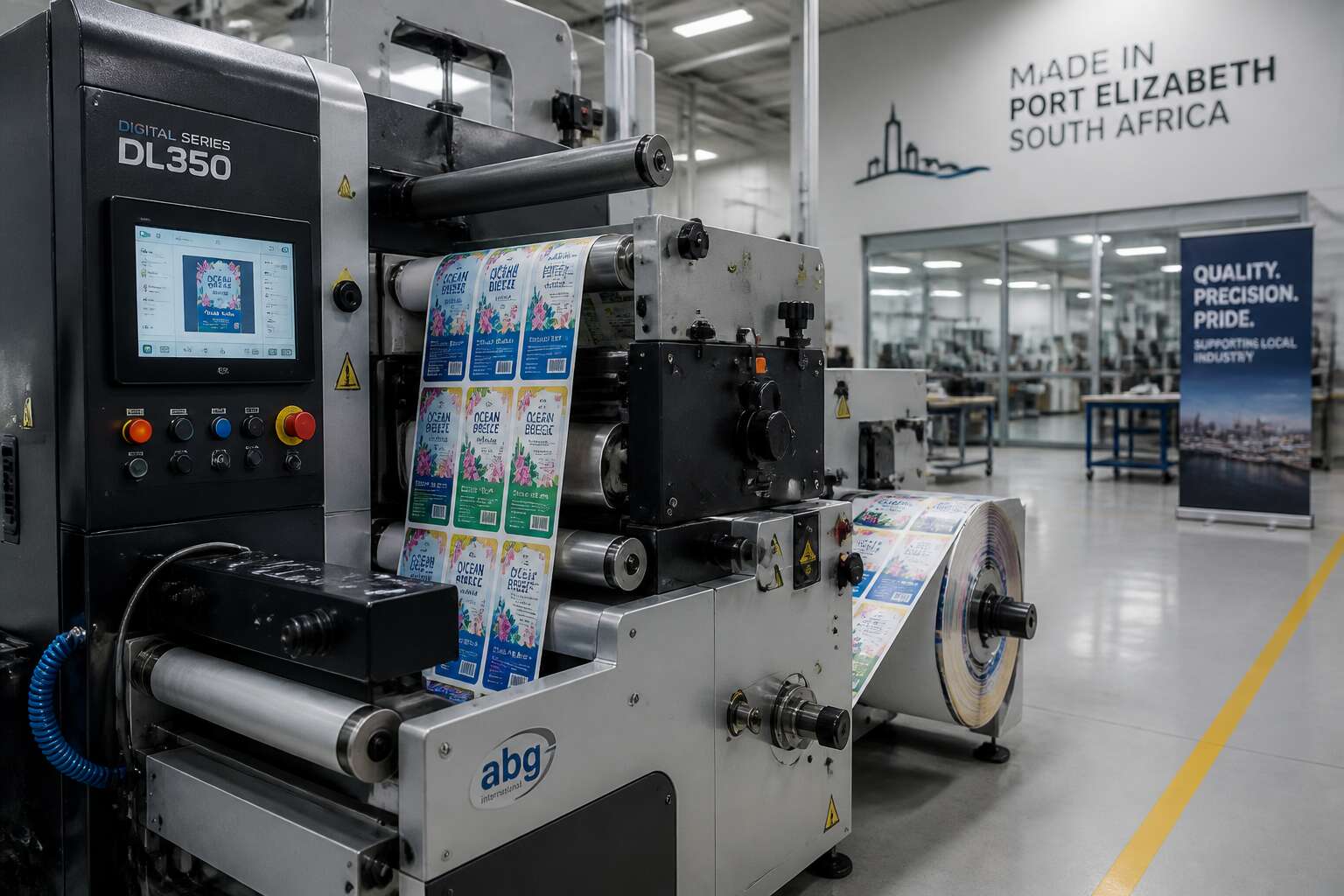
Evaluating Your Labeling Requirements in Port Elizabeth
Key Industries in Port Elizabeth Requiring Industrial Labeling
Before you invest in commercial label machines Port Elizabeth, you need to audit your labeling requirements with brutal honesty. That means counting your product variants, checking packaging surfaces, and accepting that your warehouse inventory resembles a chaotic jigsaw puzzle. This evaluation determines whether you need thermal transfer or direct thermal, and it saves you from buying a machine that only works on perfectly flat boxes.
The local economy provides a demanding test for industrial labeling. Key sectors include:
– Automotive component manufacturers who need oil resistant labels
– Seafood processors requiring moisture proof stickers that survive cold chains
– Chemical producers with compliance barcodes that must withstand sun and spray
– Logistics hubs that churn out shipping labels by the thousand each day
Each industry imposes different abrasion, adhesive, and print quality standards. A label that works for a plastic crate might peel off a steel drum. So, assess your environment first. Your commercial label machines Port Elizabeth purchase will then feel less like a gamble and more like a tailored fit.
Understanding Label Volume and Speed Requirements
Port Elizabeth does not allow for hesitation on a packing line. I have seen one stalled printer turn a calm evening into a frantic scramble before midnight. That is why you must calculate label volume before you even inspect commercial label machines Port Elizabeth. You need a number for normal shifts, and another for the chaos of peak season.
Your speed demands depend on several factors, and each one changes your choice:
- The number of product lines moving through your facility
- The distance between your printing station and the packing stations
- The time allowed for adhesive to set before stacking
Fast printing matters only if the print remains readable at the end of that speed. Match your machine to the true pace of your workflow, not the promise printed on a brochure.
Assessing Label Size, Material, and Durability Needs
The label itself often determines which commercial label machines Port Elizabeth operators should choose. A tiny cosmetic vial and a heavy chemical drum demand different print resolutions, adhesive strengths, and substrate compatibility. I have watched businesses buy a machine based on speed alone, only to discover the printhead cannot handle the abrasive paper stock they use daily.
Assess the physical dimensions of your labels first. Check the minimum and maximum width your products require. Then consider the material. Will it face moisture, sunlight, or rough handling? These factors change your purchasing decision more than any brochure.
- Paper labels for indoor use
- Synthetic films for exposure to water or chemicals
- Thermal transfer ribbons for long term legibility
Each material needs a specific print mechanism. Match your commercial label machines Port Elizabeth selection to the true conditions of your warehouse and your end customers.
Critical Features of Commercial-Grade Label Printers
Print Resolution and Speed for High-Demand Operations
Most label printers advertise a top speed, but real production rarely reaches those numbers. The gap matters. For high-demand operations, a commercial-grade label printer must hold its resolution at sustained speeds. At 300 dpi, barcodes remain crisp. Push past that limit and print quality degrades into unreadable scans.
The print head and media handling system determine this threshold. Heavier duty mechanisms keep label stock steady at higher speeds. Processor speed and memory allocation affect throughput too. When evaluating commercial label machines port elizabeth, these specs outweigh the headline speed:
- Print head resolution at 203, 300, or 600 dpi
- Sustained print speed in inches per second
- Memory buffer for complex label formats
For commercial label machines port elizabeth, matching the printer to actual shift output matters. A 203 dpi unit running fast might fail on small, dense labels. A 600 dpi model provides the sharpness that regulatory audits demand.
Connectivity and Integration Capabilities
Beyond raw output, connectivity determines whether a printer operates as a standalone tool or a direct component of a facility’s data network. A misaligned interface can halt a packaging line faster than any mechanical fault. Modern commercial label machines port elizabeth must offer serial and Ethernet ports, plus wireless protocols that accommodate shifting factory layouts.
Integration with existing software stacks remains the deeper concern. Middleware that communicates directly with ERP or warehouse management systems removes manual handling from the process. When evaluating commercial label machines port elizabeth, verify support for ZPL or similar command languages. These standards determine how smoothly the device receives print jobs and relays production data.
- Network security protocols that isolate label traffic from general office traffic
- Automated label format versioning to prevent outdated stock from printing
Without these capabilities, data waits in queues. Staff reprint. The line slows.
Build Quality and Resistance to Dust, Heat, and Moisture
A thermal printhead costs thousands of rand to replace. Coastal humidity and factory dust destroy them in months when the housing is weak. Port Elizabeth’s air carries salt and moisture. That combination corrodes internal components fast, and the damage is invisible until the printer stops.
The commercial label machines port elizabeth market demands durability. Sealed enclosures with IP ratings block particulate. Gasketed doors keep washdown water away from ribbon mechanisms. Corrosion resistant frames prevent structural failure.
Look for:
- Conformal coated circuit boards
- Protected media compartments
- Heat rated motors and rollers
Nothing ruins a shift faster than a label machine that chokes on airborne dust. It happens quietly. Then labels jam, printheads fail, and the line stops.
Media Flexibility and Handling Options
A production line changes labels mid-shift. Twenty minutes vanish while operators fiddle with rollers, sensors, and tension arms on an inflexible machine. That time is lost. Commercial label machines port elizabeth handle everything from thin paper to thick polypropylene. Wide media paths accept multiple roll widths. Pressure rollers adjust without tools. Calibrated sensors detect gaps, notches, or black marks automatically.
Consider how the printer manages consumables:
- Ribbon saver modes reduce waste
- Drop-in loading cuts changeover time
- Adjustable peel plates handle liners of different thicknesses
Media flexibility also means linerless options. These cut costs but demand a printer with the right cutting mechanism and printhead protection. The wrong handling system causes misregistration. The right one keeps labels accurate, shift after shift. For busy factories, the media path must match the material you run, protecting your commercial label machines port elizabeth investment.
Comparing Label Printer Technologies for Local Businesses
Direct Thermal Printing and Its Best Use Cases
Direct thermal printing removes the intermediary. No ribbon, no toner. The printhead applies heat to a chemically treated label, and the image appears instantly. For daily shipping operations, this cuts per label costs.
The tradeoff is longevity. Direct thermal labels darken under heat or sunlight. For short term identification, such as shipping labels or price tags, that tradeoff rarely matters. When comparing label printer technologies, I always ask how long a label must stay legible.
Direct thermal suits these applications:
- Shipping and logistics labels
- Fresh food and produce labels
- Retail price tags
- Internal tracking barcodes
Businesses searching for commercial label machines port elizabeth often discover that direct thermal units offer the lowest operating cost for high volume labeling. The printhead is the main consumable, and it lasts through many rolls. Commercial label machines port elizabeth with direct thermal heads handle daily throughput without frequent maintenance.
Thermal Transfer Printing for Long-Lasting Labels
Thermal transfer printing takes a different path. A ribbon carries the ink, and heat presses it into the label material. The result resists heat, sunlight, moisture, and abrasion. Where direct thermal labels fade, thermal transfer labels endure for years. For assets, equipment, and compliance signage, this longevity matters more than per-label cost.
Consider the range of applications:
- Wire and cable identification
- Chemical drum and hazardous waste labels
- Asset tracking tags in factories
- Outdoor signage and nameplates
Each demands a print that remains legible through harsh conditions. Thermal transfer delivers that permanence. Businesses weighing commercial label machines port elizabeth often choose thermal transfer when labels must outlast the product itself. The ribbon adds a consumable, but the extended label life balances the expense. For local firms, one question settles it: how long must the information survive?
Print-and-Apply Systems for Automated Production Lines
Local manufacturers often pause at the technology fork. Direct thermal suits short lived shipping labels. Thermal transfer handles permanent identification for assets and signage. But the choice deepens when comparing hybrid models and dedicated industrial units. The real differentiator is how the printer integrates into your production line.
Print-and-apply systems change the calculus entirely. These units automate the entire labelling process:
– Label application at high speed
– Verification of placement accuracy
– Real time data integration from ERP systems
For Port Elizabeth producers, a print-and-apply station removes human error and keeps production flowing. Commercial label machines port elizabeth suppliers offer these as turnkey solutions, pairing print engines with applicator arms or blow on systems. The upfront cost exceeds a standalone unit, yet the labour savings and reduced rework justify it.
Mobile and Portable Labelers for Field Operations
A technician standing in a factory yard shouldn’t walk back to a fixed printer every time a cable needs a new identification tag. Mobile and portable labelers solve that exact problem. These handheld units connect via Bluetooth to a phone or tablet, letting workers print on the spot. For Port Elizabeth operations with multiple warehouse zones, this cuts downtime dramatically.
Good mobile labelers share a few traits:
- Rugged casing that survives drops onto concrete
- Long battery life for a full shift
- Easy transfer of label templates from an ERP system
Commercial label machines port elizabeth suppliers now stock these portables alongside their industrial lines. The tradeoff is speed, but for asset tagging, pipe marking, or shelf labels, a portable unit pays for itself in saved footsteps.
Hybrid and Multi-Function Labeling Devices
The shift from single-purpose printers to hybrid setups is changing how Port Elizabeth factories approach labeling. A fixed industrial unit handles the daily grind of high volume production labels, while a portable device covers ad hoc jobs on the factory floor. The key is matching the machine to the task rather than forcing everything through one system.
Consider how a typical maintenance schedule works. Planned shutdowns generate hundreds of labels for pipework and electrical panels. Those run efficiently on a benchtop thermal transfer printer. But the unexpected fault at 2pm? That needs a handheld unit that goes to the machine, not the other way around.
– Fixed thermal transfer printers: best for high volume, consistent label sizes
– Portable Bluetooth labelers: suited for one-off tags and on-site identification
– Print-and-apply systems: necessary when production speed demands automation
For businesses upgrading their commercial label machines port elizabeth suppliers offer, the practical move is often a mix of first and second tier devices. A warehouse supervisor in Port Elizabeth might use a portable unit to tag new pallet racking locations, then issue a batch of durable asset labels from a desktop thermal transfer printer. Both machines pull from the same label template library, so the data stays consistent.
Multi-function devices add another layer. Some modern units combine direct thermal and thermal transfer modes in a single chassis. That gives a factory the flexibility to print short lived shipping labels on one shift and permanent polyester labels on the next, all from the same piece of hardware. Downtime drops because operators learn one interface. Spare parts inventory stays lean. For a medium sized operation in the greater Gqeberha area, that kind of flexibility often outweighs the lower upfront cost of buying two separate single purpose machines.
When the time comes to evaluate commercial label machines port elizabeth based operations, the conversation should start with workflow, not with specifications. Any solid supplier will ask how labels are used across the day. The answers usually point to a layered system: automated equipment on high speed lines, portable units for field work, and a versatile workhorse in between.
Navigating the Supplier Landscape in the Eastern Cape
Finding Authorized Distributors in Port Elizabeth
Walk into any packaging plant in the Eastern Cape and you will find several label machines, each purchased from a different supplier. Often, only one is still under a valid service agreement. That pattern explains why navigating the supplier landscape matters as much as the machinery itself. Finding commercial label machines port elizabeth is straightforward; finding an authorized distributor is the real challenge.
Authorized distributors keep their technicians factory certified. They stock genuine thermal printheads, platens, and sensors. General resellers may offer attractive pricing, but they lack the local engineering depth when something fails mid-shift.
Questions worth asking during supplier vetting:
– Do they hold authorized service contracts from the manufacturer?
– How many certified technicians sit in their Port Elizabeth branch?
– Do they maintain a loaner fleet for emergency breakdowns?
When you need commercial label machines port elizabeth, verify the after-sales infrastructure before you commit.
Evaluating Technical Support and After-Sales Service
Downtime in the Eastern Cape packaging sector is measured in lost contracts, not lost minutes. One stalled line can consume a month of profit margins. That reality demands evaluation beyond the initial price quote. Purchasing commercial label machines port elizabeth means purchasing the service ecosystem that keeps them running.
Start with response time guarantees. A distributor who cannot commit to a four-hour emergency window for industrial zones like Coega lacks the necessary logistics. Then ask about remote diagnostics. Modern thermal printers embed telemetry that lets support teams identify failing components before they halt production. Suppliers who hesitate on these points reveal deeper gaps:
- Remote monitoring that flags wear before failure.
- Swap protocols that shorten replacement times.
- Fixed-interval maintenance reporting.
The spare parts ledger deserves scrutiny. Some distributors stock only current models, forcing weeks of waiting for a simple drive roller. Commercial label machines port elizabeth reveal hidden costs through service gaps.
Availability of Genuine Consumables and Spare Parts
Navigating the supplier landscape in the Eastern Cape requires more than a price list. Genuine consumables and spare parts determine whether commercial label machines port elizabeth keep a production line moving. Some suppliers treat labels and ribbon as afterthoughts, yet these items affect print quality and printhead longevity.
A distributor with local warehousing can supply thermal transfer ribbon, adhesive stocks, and cleaning kits within hours. For commercial label machines port elizabeth, that speed decides whether a line restarts today or tomorrow. Others ship from Gauteng, adding two days to emergency orders. That gap matters when a packaging run demands immediate replenishment.
Check spares held locally:
- Printheads and platen rollers top any critical list.
- Sensors and driver boards fail without warning.
- Cutter blades and ribbon rewind spindles wear with continuous use.
When a supplier keeps genuine parts on hand, operations hold to schedule. Without that inventory, every fault becomes a crisis.
Comparing Local Stock and Lead Times
Two suppliers may quote the same price for commercial label machines port elizabeth, but their real difference appears after the sale. One keeps stock in Gqeberha. The other ships from Gauteng. That gap shows through when equipment fails midday.
Lead times tell the real story. Local stock means a repair part arrives within hours. Distant warehouses stretch that to days. Consider what local suppliers often hold:
- Printheads ready for same day pickup
- Ribbon and label stock on the shelf
- Technicians familiar with the machine model
Distant suppliers may offer lower prices, but their lead times create downtime. For most operations, that tradeoff rarely balances.
Reading Service Level Agreements Carefully
When you buy commercial label machines port elizabeth, the service level agreement decides how problems get solved. Most buyers skim these documents. I have seen the fallout.
A proper SLA specifies response times, not just resolution times. It names the person or team responsible for your account. It states what happens if a technician cannot reach your facility within the agreed window. It defines uptime guarantees and the compensation if those guarantees fail.
Look for these elements:
- Clear escalation paths for urgent breakdowns
- Defined response windows for different severity levels
- Penalty clauses that actually hold the supplier accountable
Eastern Cape suppliers vary widely. Some include remote diagnostics. Others refuse. That difference appears when you need help most.
Getting References from Established Local Businesses
Asking for references feels like an admission of distrust, yet it is the only way to see how a supplier behaves when no one is watching. Established local businesses in the Eastern Cape will tell you if the commercial label machines port elizabeth they purchased still perform after two years of dust and load shedding. Their answers reveal more than any brochure.
Call three of them. Ask specific questions about breakdown frequency and response times. A supplier who hesitates to share contacts is telling you something. When you speak to those businesses, listen for patterns:
- How long did installation actually take?
- Did training cover operators or only managers?
- What happened when a spare part was needed urgently?
One reference told me their technician arrived with the wrong firmware. Another said their commercial label machines port elizabeth were down for a week because nobody answered the after-hours line. These conversations cut through the performance of salesmanship and expose the daily reality of ownership.
Calculating the True Cost of Commercial Labeling Equipment
Upfront Pricing vs. Lifetime Operating Expenses
The machine that costs the least at purchase often demands the most over its lifetime. For commercial label machines port elizabeth, the invoice is only the beginning!
Energy consumption, print head replacement cycles, and unscheduled downtime accumulate across the machine’s working life. A unit that halts production for six hours each month quietly erases its price advantage.
Consider the consumables pipeline. Each roll of ribbon or thermal media carries recurring weight, and the speed of your applicator determines how quickly these costs compound.
Total cost of ownership breaks into:
- Electricity draw during peak production shifts
- Replacement platens and cutter blades
- Labour committed to manual intervention
- Waste from misprinted or misapplied labels
For commercial label machines port elizabeth operations, a cheaper unit that jams weekly outruns a premium machine’s total cost within three years. In high volume facilities, avoided stoppages alone justify the premium.
Cost Per Label and Consumable Efficiency
The purchase price fades into the background once media costs start compounding. Calculating cost per label requires tracking consumable consumption against usable output. For commercial label machines port elizabeth, this figure reveals whether the unit genuinely pays its way. Consumable efficiency is not a factory setting, it is a discipline.
The numerator stays fixed, but the denominator shrinks with every inefficiency. Consider what affects the denominator:
– Number of acceptable labels per roll
– Ribbon length consumed per thousand labels
– Rejected labels from registration drift
– Setup waste during each batch changeover
A machine running 500,000 labels a month with 2% waste produces 10,000 unusable units. At R0.50 per label, that is R5,000 in recurring losses. Operators who track these numbers daily keep their true cost low, while those who ignore them discover the gap only at year end. The most honest commercial label machines port elizabeth reveal their efficiency in the monthly media purchase order.
Potential Savings from Reduced Downtime and Waste
Downtime is the quiet killer. A labeler that halts for ten minutes per shift does not delay production, it erases profit. Those minutes multiply across the year, and each maintenance call arrives with its own invoice. Buyers of commercial label machines port elizabeth quickly learn that every unplanned stop carries a price tag missing from the initial quote.
Waste behaves similarly. Misaligned labels and setup overruns turn expensive media into scrap. Operators who watch these losses understand the real cost. Savings from reduced downtime and waste often exceed the price gap between a budget model and a premium one. Consider what is lost when a line freezes:
– Idle wages
– Overtime to catch up
– Emergency service visits
– Discarded labels and ribbon
The machine that runs consistently pays for itself through what it does not consume. That reliability defines the true value of commercial label machines port elizabeth.
Leasing, Renting, and Custom Financing Options
Financing changes how the true cost of commercial label machines port elizabeth appears on the books. Business owners often assume outright purchase is the only route. Leasing spreads the expense into monthly installments, preserving capital for raw materials. Renting suits short-term contracts or seasonal peaks, where a five-year commitment makes little sense. Custom financing options, structured around production volumes, align repayments with actual output. These structures move commercial label machines port elizabeth from capital expenditure to operational expense.
The correct arrangement depends on cash flow and equipment lifespan. A decade of service justifies different terms than a pilot project. When local suppliers present proposals, weigh:
– Interest rates in rand versus hidden administrative fees
– Maintenance inclusions within the monthly figure
– Buyout clauses affecting eventual ownership
– Penalties for early termination or upgrades
Every option reshapes the total expenditure. The financing path determines whether the investment becomes liability or leverage.
Streamlining Operations with Your New Label Machine
Integrating Label Printing with ERP and Inventory Systems
Hardware matters, but integration is where the real leverage lives. I have watched Port Elizabeth warehouses shave picking errors simply by letting label data flow directly from their ERP. The printer pulls order lines, batch numbers, and expiry dates automatically. No one retypes anything. That alone eliminates an entire class of mistakes.
When stock moves, the same machine can update inventory records in real time. Your team stops juggling spreadsheets and starts trusting the labels in front of them. For companies running commercial label machines port Elizabeth, this connection transforms a peripheral into a production asset.
Integration focus points:
– Real time inventory adjustment on every label run
– Automatic batch and expiry data capture
– Reprint control tied to order changes
The payoff is quieter, faster operations with fewer manual handoffs.
Ensuring Barcode Compliance and Print Quality Standards
There is a quiet thrill when a new machine finally hums through its first full shift without a hitch. That honeymoon period, however, is where the real work begins. The way your team adjusts to the workflow determines whether that investment pays off. In a busy Port Elizabeth warehouse, the label applicator becomes the pulse of the production line, but only if the processes around it are equally disciplined.
Barcode compliance is where many operations stumble. A label that looks fine to the naked eye can still fail a scanner if the contrast is off or the quiet zone is compromised. This is not about aesthetics. It is about the integrity of the data carried on every package. Here are the core standards to enforce from day one:
– Verify print contrast and scannability on every batch run
– Confirm label placement allows for proper scanner access
– Match material type to the print method to prevent smudging or fading
Poor print quality leads to rejected shipments and delayed deliveries. When your commercial label machines port Elizabeth operation relies on high output, a single poorly printed batch stalls the entire dispatch schedule. Routine checks take minutes and save hours. The operators who catch these issues early are the ones who keep the operation moving. Consistent barcode clarity translates directly into fewer customer complaints and faster turnaround times for your logistics partners.
Training Operators and Creating Standard Procedures
Training operators on a new label machine is less about the buttons and more about building muscle memory for troubleshooting. In Port Elizabeth, where dispatch deadlines wait for no one, a worker who hesitates at a jam costs more than time.
Standard procedures should cover the daily rituals that keep commercial label machines port elizabeth running smoothly. Write them down, then test them:
- Check sensor alignment before each shift
- Clean print heads after every roll change
- Record material batch numbers for traceability
When these steps become routine, the machine fades into the background and the line moves forward.


0 Comments