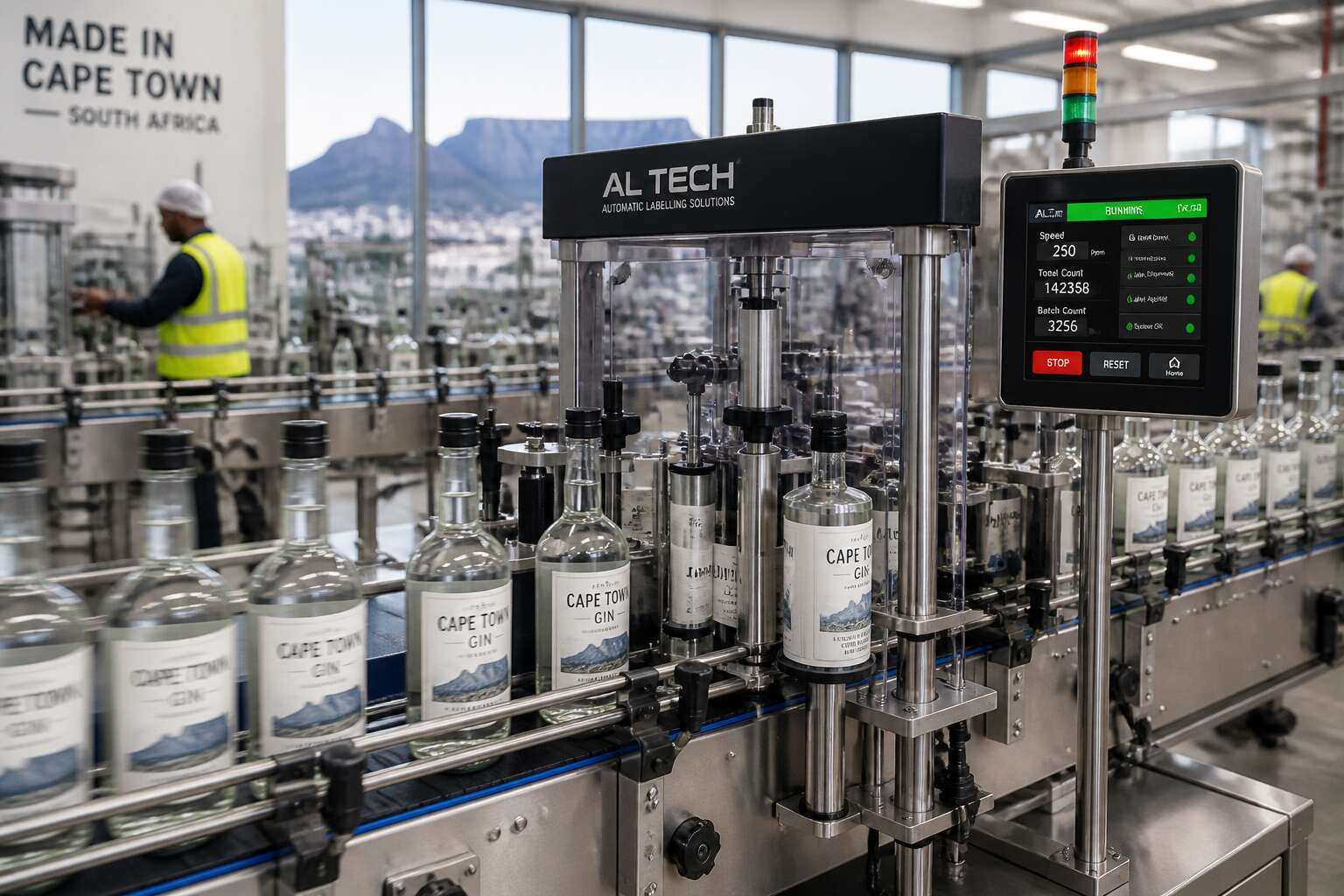
Understanding Inline Labeling Technology for Production Lines
Key Differences Between Inline and Standalone Labeling Units
The true test of any production line lies in its consistency. When you integrate inline automatic labeling systems cape town, the labeling head synchronizes with the conveyor’s speed, applying pressure sensitive labels continuously. This contrasts sharply with standalone units, which demand manual or semi automatic feeding.
Standalone equipment requires buffering between processes. Inline units eliminate that gap entirely. Consider these operational factors:
- Inline systems maintain a continuous flow, reducing product handling
- Standalone machines allow flexible placement but disrupt throughput
- Inline setups require precise sensor integration
From my experience, inline technology relies on encoder feedback and real time adjustments. Standalone labeling offers simplicity, yet loses that seamless synchronization. The harbor of Cape Town, with its industrial density, favors systems that reduce changeover times and minimize footprint. Understanding this distinction informs smarter automation investments.
Core Components of a Fully Automatic Labeling System
The magic of inline automatic labeling systems cape town usually hides beneath a stainless steel shroud. I promise, the secret isn’t the adhesive. It’s the servo driven applicator that reads a product’s position without ever touching it. A vision system monitors placement mid flight, while a PLC juggles speed variables in real time. That’s engineering precision.
Peek inside a fully automatic labeling system and you will see familiar parts doing heavy lifting:
- A dancer arm that manages roll tension, preventing smears
- A brush station that presses the label into curves
- A reject gate that ejects mislabeled items without stopping the line
Getting these components to sync separates a smooth operation from a sticky mess! When you invest in inline automatic labeling systems cape town, you’re buying that sync.
How Inline Labelers Integrate With Existing Conveyors and Packaging Equipment
A labeling line is only as fast as its slowest handoff. Inline automatic labeling systems cape town must speak the same electrical language as every motor, sensor, and reject gate around them. A servo driven labeler reads speed from an encoder on the conveyor, not a timer, so labels land correctly even when the line surges.
Integration goes beyond speed matching. The labeler signals upstream fillers to pause and listens to downstream checkweighers. A missing label triggers a reject gate without stopping the line.
- Encoder signals match label speed to conveyor velocity.
- Photoeyes adjust pitch between products.
- PLC handshakes coordinate with cappers and cartoners.
These connections make the labeler one node in a responsive packaging network. For Cape Town producers, that means fewer jams and faster changeovers.
Industries in Cape Town That Rely on Automatic Labeling
Wine Estates and Beverage Producers in the Western Cape
From Stellenbosch’s vineyard rows to the craft breweries of the Old Biscuit Mill, the Western Cape’s liquid treasures demand precise identification. Consider that over 95% of South Africa’s wine exports leave via Cape Town’s port, each bottle needing tamper evident seals, vintage labels, and batch codes. This is where inline automatic labeling systems cape town have become indispensable. Wine estates handle delicate glass at high speeds. Beverage producers contend with constantly changing SKUs, seasonal runs, and regulatory compliance. These systems apply pressure sensitive labels at rates that would exhaust any manual crew. For many operations, the choice is clear:
- Protect brand integrity on export shipments
- Meet international traceability standards
- Reduce downtime between production batches
Beverage producers also use these inline units for neck rings, back labels, and promotional stickers. The integration with existing conveyor lines means minimal floor space intrusion. In a region defined by its liquid exports, automatic labeling is no longer a luxury. It is the quiet machinery behind every shelf worthy bottle.
Pharmaceutical Manufacturers and Regulatory Compliance
Pharmaceutical labeling errors are measured in lives, not lost minutes. One mislabeled vial triggers a recall that costs millions and erodes patient trust. SAHPRA mandates precise artwork, expiry dates, and batch numbers on every unit. Manual verification cannot keep pace with volumes moving through Cape Town’s pharma plants.
Inline automatic labeling systems cape town offer pharmaceutical lines certainty. They apply labels with micron level accuracy, then verify each application through integrated sensors. Serialization codes, tamper evident seals, and variable data printing happen in one pass. No second handling. No human error window!
Consider what compliance actually demands:
- Unique device identifiers for medical devices
- Machine readable data on every pack
- Line clearance documentation between batch changes
Each requirement becomes achievable with inline automatic labeling systems cape town. The system records every unit, building a digital trail inspectors accept without hesitation. For contract manufacturers with multiple clients, this agility is decisive. One line switches products in minutes.
Food Processing Facilities and Hygiene Requirements
Food processing facilities in Cape Town face a paradox: washdowns happen hourly, yet labels must stay legible and fixed. A sauce bottle that loses its label in a cold chain chiller becomes a compliance nightmare. Inline automatic labeling systems cape town are engineered for these environments. They use stainless steel housings, IP-rated components, and adhesive systems that bond to wet or chilled surfaces.
This matters because hygiene audits reward visible cleanliness. Labeling equipment that traps residue fails inspection. Modern inline units tolerate caustic washdowns, then resume exact placement at full line speed.
Consider what food safety auditors check:
- Label adhesion after thermal shock
- Legibility of lot codes under condensation
- Absence of label residue in conveyor crevices
- Changeover speed between allergen variants
Inline automatic labeling systems cape town let food processors hit each standard without slowing production. They are built to be rinsed, steamed, and scrutinized.
Cosmetics and Household Chemical Product Lines
Roughly 80% of Cape Town’s cosmetics manufacturers now use automated label application, yet many still battle label curl on glycerin bottles. Inline automatic labeling systems cape town solve this by applying pressure-sensitive labels before caps are torqued, reducing misalignment. For household chemicals, the challenge is caustic fumes and frequent batch changes.
Consider what these product lines demand:
- Labels that resist chemical splash without smearing
- Quick changeovers between 50 ml testers and 5 liter refills
- Reliable code printing on dark or translucent containers
Inline automatic labeling systems cape town integrate directly with filling lines, so a hand cream and a bleach bottle can run sequentially with no manual adjustment. That is the real advantage for producers juggling SKU proliferation.
Critical Features to Evaluate When Selecting Labeling Machinery
Production Speed and Throughput Capabilities
The silence of a stalled line is a sound every production manager dreads. For any inline automatic labeling systems cape town installation, production speed is a hard requirement. Look beyond the theoretical maximum. The true measure is sustained throughput, the rate your operators maintain during a gruelling shift.
Consider the variability of your product stream. A labeler that chokes on a misaligned bottle costs you hours. The machinery must handle jams without cascading into a shutdown!
Here are the critical features to examine:
- The servo motor’s response time to sensor feedback.
- The container size changeover procedure, measured in minutes.
- The buffer capacity before the labeling station.
These elements define real-world performance. A machine might boast a high number, but if it cannot sustain that rate without operator intervention, the throughput is a fiction. Many lines fail from fast machinery that stops too often.
Label Placement Accuracy and Repeatability
Label placement accuracy defines how consistently your product presents itself. A label applied one millimeter off center might escape notice on a single bottle, but across ten thousand units, the inconsistency becomes a visible flaw. For inline automatic labeling systems cape town, the tolerance specifications matter less than the machine’s ability to hold that tolerance over time.
Consider these factors when reviewing accuracy:
- The registration system’s ability to read container position without slowing the line.
- The mechanical stability of the applicator arm under continuous operation.
- The software’s capacity to correct drift without operator input.
In my experience, repeatability is not a static promise. It is a behavior under heat, vibration, and shifting product weights. The best inline automatic labeling systems cape town deliver the same placement at hour one and hour eight.
Quick-Change Tooling for Multiple Container Formats
Format changeovers often consume more production time than the labeling itself. A machine requiring forty minutes to swap tooling for a different bottle profile will quietly erode throughput gains. Quick-change tooling addresses this directly.
For inline automatic labeling systems cape town, the evaluation starts with the mechanics of changeover. Do you need spanners, or does the system use toolless clamps? Are change parts indexed and labelled? Can the operator store digital recipes so servo drives adjust automatically? These questions separate capable systems from frustrating ones.
I have seen operators dread changeover days on poorly designed machines. The relief when a well designed system handles a format swap in minutes is real. The best inline automatic labeling systems cape town make the process almost pleasant! Changeover speed matters, but so does repeatability after the switch. A fast change that requires recalibration costs you more than it saves.
The critical features are few but decisive:
- The number of touchpoints requiring manual adjustment
- Whether guide rails and applicator heads move in concert
- The availability of pre-set changeover programs with documented accuracy
Rugged Construction for Humid Coastal Environments
Salt-laden air from the Atlantic or Indian Ocean does not respect factory walls. Coastal humidity accelerates corrosion on exposed steel at a rate that surprises first-time buyers. For inline automatic labeling systems cape town, the metal grade is the primary barrier.
Look for 316L stainless steel on the frame and main contact surfaces. That is non-negotiable. A labeler built for inland use will show rust freckling within months when placed near the coast. Evaluate these specific elements:
- Sealed bearings and bushings that resist condensation ingress.
- Powder-coated guards that withstand constant moisture.
- IP-rated electrical cabinets with integrated breather valves.
The electrical cabinet matters equally. A poorly sealed enclosure draws in damp air, leading to intermittent faults in the servo drives. When evaluating inline automatic labeling systems cape town, the assembly’s corrosion resistance defines its usable lifespan in this region.
Integration With Barcode Verification and Print Systems
A misprinted barcode on a pharmaceutical label can halt an entire production line. The verification system must communicate directly with the print engine and the labeler’s servo drives. When evaluating inline automatic labeling systems cape town, examine how the vision controller handles reject confirmation.
Integration depth determines whether verification is reactive or preventive. A system that reads each code, compares it against the job file, and signals the labeler to pause before the next container reaches the tamp head prevents waste. Without this closed loop, defects slip through.
- The camera must trigger on the labeler’s encoder signal, not a separate timer.
- The print controller should receive real-time feedback from the verification unit.
- Reject mechanisms need to operate within the labeler’s cycle time.
Print and apply systems introduce another variable. Ribbon tension, thermal printhead temperature, and label web position all affect code readability. The integration must allow these parameters to adjust without stopping production.
Practical Considerations for Cape Town Manufacturing Operations
Procurement Timelines and International Shipping to Cape Town
Procurement timelines for inline automatic labeling systems cape town often stretch beyond the equipment build itself. Shipping from European or Asian manufacturers typically adds six to eight weeks, and Cape Town’s port congestion can introduce further delays. I have seen production managers underestimate this window by a month, which disrupts packaging schedules.
International shipping to Cape Town requires precise documentation. Customs clearance for automated machinery demands specific import permits and compliance certificates.
- Bill of lading and commercial invoice
- SABS approval for electrical components
- SARS customs code verification
These steps require attention before ordering, as shipping schedules are fixed.
Local Technical Support and Maintenance Contracts
After installation, the relationship with the supplier becomes the defining factor in long-term uptime. Local technical support in Cape Town means a technician can be on your floor within hours, not days. I have seen plants lose a full shift waiting for a remote diagnosis that a local engineer could have resolved in twenty minutes. Maintenance contracts for inline automatic labeling systems cape town should specify response times, spare parts availability, and scheduled preventive visits.
A well-structured agreement covers:
- Annual calibration of sensors and applicators
- Priority access to consumables like label reels and glue nozzles
- Firmware updates for the control system
These details matter because production stoppages rarely wait for a convenient moment.
Availability of Spare Parts and Consumables Locally
A missing sensor can halt a bottling line faster than a power cut. I watched a Cape Town facility lose an afternoon because a tiny applicator roller was ordered overseas. The machine was superb. The logistics were not.
When you evaluate inline automatic labeling systems cape town, ask exactly which components the supplier keeps on the shelf. The honest ones show a bin room. The clever ones show a bin room with a spreadsheet. Ask for it!
Critical local stock covers:
- Glue nozzles and pressure hoses
- Photo-electric label sensors
- Drive belts for the applicator arm
Agencies that maintain local inventories know how the harbour works. A delayed container is not an inconvenience; it is a line stop. Ensure your contract lists these consumables as available within 24 hours. The survival of your shift depends on the spare parts for your inline automatic labeling systems cape town sitting on a shelf in Montague Gardens.
South African Electrical Standards and Installation Requirements
Cape Town’s grid has a personality of its own, and your labeling line must be wired for it. The Western Cape experiences voltage dips that make sensitive servo motors blink. SANS 10142 wiring standards are the baseline, but the real work begins with your inline automatic labeling systems cape town installation. You need a dedicated 3-phase supply, not a shared circuit with the compressor.
The installer must check phase rotation before commissioning, or your applicator runs in reverse. Earth leakage protection prevents the damp Atlantic air from turning a label head into a hazard. Surge suppression matters, because one lightning storm over Table Mountain can send a spike through the feed rollers.
Local electricians familiar with production machinery understand the harbour’s power quirks. Your contract should specify a commissioning checklist that includes:
Voltage stability logging
Motor thermals under load
E-stop circuit verification
Without these checks, your inline automatic labeling systems cape town will stumble the moment the grid dips.
Operator Training and Ongoing Staff Development
An operator who understands why a label peels is worth more than one who simply knows which button to press. Staff development for inline automatic labeling systems cape town installations often gets deferred until a line stops, and then it is too late.
I have seen Western Cape factories lose a full shift because nobody on the night crew knew how to recalibrate a sensor. The most practical training happens in the first month, not the first day. New operators need to see the machine fail, deliberately, under supervision. That builds the mental model that no manual can convey, especially for inline automatic labeling systems cape town lines with rapid changeovers.
Consider these training realities for production floors:
- Rotate staff across shifts so knowledge does not leave at 14:00
- Record training sessions on the actual machine, not a generic video
- Build a handover checklist covering sensor settings and glue temperatures
The operator who resets a jam correctly is worth more than the one who calls for help. Revisit procedures every quarter because people forget.
Calculating the Financial Impact of Automated Labeling
Initial Capital Expenditure vs. Long-Term Operational Savings
The capital outlay for inline automatic labeling systems cape town often feels excessive at first. That figure, though, represents only the opening invoice. The financial impact emerges over months of continuous operation, through every shift schedule and product changeover.
Manual labeling brings hidden costs: hourly wages, misapplied labels, and cleanup of spilled adhesive. An automated line eliminates most of those. The difference becomes obvious when you itemize the savings.
- Labor hours drop by up to 80 percent per line
- Label waste shrinks below 0.5 percent
- Changeover time shortens from minutes to seconds
These reductions alone often cover the initial expenditure within two years. Add lower rejection rates and fewer returned goods, and the payback period shrinks further. For a Cape Town bottling plant on two shifts, operational savings regularly surpass the purchase price by year three.
Labor Cost Reductions Through Automation
Calculating the financial impact starts with a detailed audit of your current line. Track every hour spent hand-applying labels, every minute lost to changeovers, and every rejected product. Most Cape Town bottlers discover the true cost of manual labor only after they itemize it.
Investing in inline automatic labeling systems cape town converts those variable labor costs into a fixed, predictable expense. One operator supervises the automated line instead of four staff members applying labels by hand.
The arithmetic is straightforward:
- 80 percent reduction in labeling labor hours
- 0.5 percent label waste versus 3 percent manual
- 15 minute changeovers cut to under 60 seconds
For a two-shift facility, annual payroll savings often exceed R1.2 million. That figure alone typically funds the capital investment within the payback period. The financial case for inline automatic labeling systems cape town rests on this labor arithmetic.
Material Waste Reduction and Fewer Rejected Products
Every rejected bottle carries the cost of its label, its contents, and the labor that brought it to that moment. Manual labeling lines accept a certain level of damaged film and crooked wraps as unavoidable. A 3 percent waste rate on a high volume beverage line quietly drains thousands of rands each month from the bottom line.
Inline automatic labeling systems cape town change this arithmetic. Precise web tension and registration control cut label waste to under half a percent. Integrated camera systems reject faulty containers before they reach packaging, preventing returns and brand damage.
Consider what a single rejected unit costs:
- Raw materials and packaging
- Machine time and energy
- Rework or disposal fees
- Lost production capacity
When waste drops, those costs disappear. Fewer rejected products mean less shrink, smoother downstream flow, and a cleaner cost per unit. Many producers find that adopting inline automatic labeling systems cape town pays for itself through material savings alone.
Estimating Payback Periods for Mid-Sized Production Facilities
Payback periods for inline automatic labeling systems cape town surprise production managers. A mid-sized facility running two shifts can calculate the return within weeks. The math starts with a question: what does each unlabeled bottle cost you today?
Build the calculation from three figures. First, the hourly cost of manual labeling labor, including overtime. Second, the value of production time lost during label roll changes. Third, the administrative cost of handling customer complaints.
- Add the annual total of these three figures
- Subtract the projected operating cost of an automated system
- Divide the equipment price by the resulting monthly savings
For most mid-sized producers in the Western Cape, that division produces a payback period between fourteen and twenty two months. I have seen the figure tighten when you factor in reduced changeover time. Inline automatic labeling systems cape town eliminate the standalone unit’s conveyor handoff, shaving minutes from every batch change.
Implementation Roadmap and Ongoing Maintenance
Conducting a Production Line Audit Before Purchase
A full production line audit happens before any purchase decision. We spend a shift at your facility, measuring actual cycle times and watching operators manage changeovers. The data gives us a baseline for what an inline automatic labeling systems cape town installation must achieve. Without this audit, you risk buying a machine that matches the brochure but not your line.
The implementation roadmap begins with floor space allocation and utility points. We mark the conveyor path, confirm electrical supply, then schedule installation to avoid peak season. Commissioning takes one to two days, depending on your product mix. After that, maintenance becomes the real work. Quarterly inspections focus on glue viscosity, sensor calibration, and belt tension. We document everything, so small issues never become line stops.
Managing Installation With Minimal Production Downtime
Installation planning starts with a simple premise: keep the line running while the new equipment goes in. We stage the inline automatic labeling systems cape town installation during off shifts and weekends, when your production schedule has natural gaps. Preassembly happens at our workshop, so the on site work stays short.
- Day one covers conveyor tie ins and electrical connections.
- Day two handles machine setup and label path calibration.
Commissioning rarely stretches beyond two days for standard product mixes. After that, quarterly maintenance visits catch small problems before they become line stops. We check glue viscosity, sensor alignment, and belt tension every time. The documentation builds a history, so nothing creeps up on you unexpectedly.
Calibration Protocols and Performance Validation
In our experience, label placement drift can reach 0.4 mm within three months without a structured validation loop. That is the difference between a compliant batch and a rejected one.
The implementation roadmap for inline automatic labeling systems cape town should define phase gates, not just installation dates. Each phase carries an acceptance test: glue pattern consistency, splice reliability, and sensor repeatability at full line speed. You sign off on one phase only when the next is fully prepared.
- Week one: baseline throughput and reject rate capture.
- Week four: first calibration check against the master container set.
- Week eight: full production validation with random audit sampling.
Ongoing maintenance calibration protocols demand torque checks on applicator rollers and a documented zero point drift test every 80 operating hours. Performance validation then ties those numbers to actual output, so inline automatic labeling systems cape town keep delivering measurable yield instead of quiet decline.


0 Comments