Understanding Inkjet Label Printing Technology
How Inkjet Label Printers Work
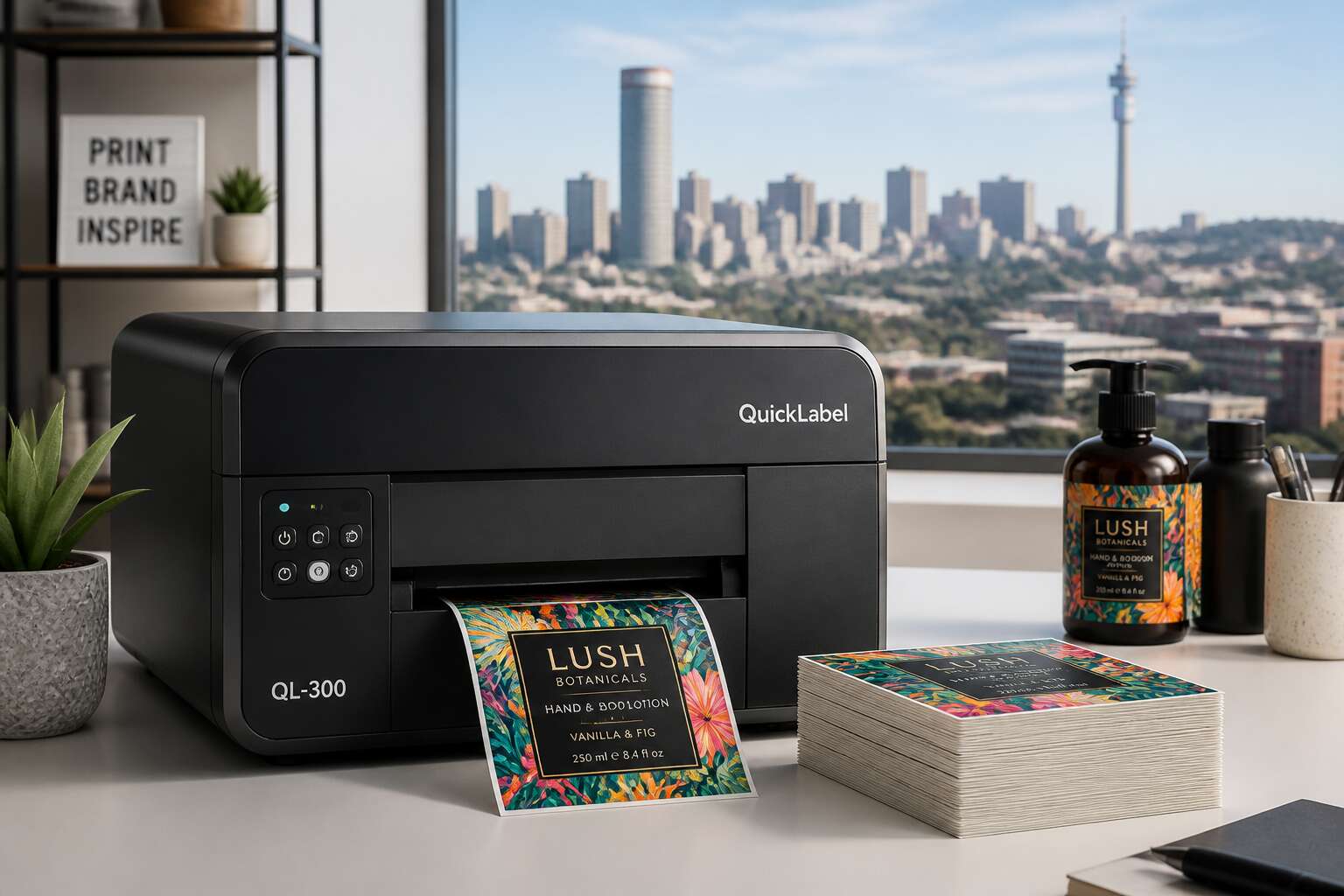
Most packaging decisions come down to how well a label survives the shelf. Inkjet label printer gauteng operations rely on firing thousands of microscopic ink droplets through precision nozzles each second, landing on paper or synthetic stock to form sharp text and drying instantly.
The technology follows two main paths. Thermal inkjet heats ink into a vapour bubble that propels the droplet. Piezo electric printheads use a crystal that flexes under voltage, squeezing ink out with exact control. Both achieve the fine detail needed for barcodes.
- Nozzle density across the printhead
- Drop size and spread on the substrate
- Colour calibration routines between runs
In my years on production floors, I have watched operators master these variables, and the precision never stops impressing me! The mechanics decide whether a label holds up under warehouse heat and sunlight. When a machine fails, the printhead is usually the first place to look. That is where the attention of an inkjet label printer gauteng buyer naturally lands.
Advantages Over Other Printing Methods
Flexographic plates take days to produce. Inkjet skips that step entirely. For an inkjet label printer gauteng operator, the advantage is time to market. I have seen this shift transform packaging workflows.
Consider a typical short run. A flexo press needs setup, plate mounting, and ink mixing. Inkjet needs a digital file and minutes of calibration. That is the difference between hours and days.
Cost structures favour inkjet below certain volumes. No plates means no plate costs. No cylinders means no storage. The economics shift:
- Short runs become profitable
- Versioning becomes free
- Inventory shrinks
The label quality holds up. Barcode sharpness and colour stability match flexo for most jobs.
Common Applications Across Industries
Inkjet technology defines how labels emerge, droplet by droplet, from the printhead. Piezo heads bend crystals to fire precise dots, while thermal heads use rapid heat. For an inkjet label printer gauteng, this engineering dictates whether a two millimetre barcode remains scannable or smudges into noise!
Applications span industries I never expected to see converge. Pharmaceuticals require unique serialisation codes. Fresh produce lines print harvest dates at full speed. Craft breweries change label designs every small batch.
- Logistics relies on tracking QR codes
- Winemakers note vintage and cellar details
- Chemical suppliers must show hazard symbols
Each substrate reacts differently to drop placement. That is why local testing matters, and why operators in Gauteng keep pushing this technology forward.
Key Technical Specifications to Know
From my experience, a specification sheet only hints at real performance. Resolution, measured in dots per inch, determines how sharply fine text and logos render on an inkjet label printer gauteng. A 600 dpi head produces crisper edges than a 300 dpi unit, though higher detail demands slower output.
Droplet volume matters as much. Smaller picolitre drops create smoother gradients and denser barcodes. Print speed affects production pacing, with industrial units reaching several metres per minute. Media thickness capacity and ink chemistry, water-based versus UV-curable, decide whether labels resist moisture or chemicals.
Connectivity options, from Ethernet to wireless interfaces, link the printer to existing packing lines. Every specification interacts with the next, so balancing resolution, speed, and durability means testing real materials before purchasing an inkjet label printer gauteng.
Key Considerations When Selecting a Label Printer for Your Business in Gauteng
Print Quality and Resolution Requirements
A label is a silent contract with your customer. If the print bleeds or pixelates, that trust dissolves before the product is opened. Resolution, measured in DPI, dictates this fidelity. Most Gauteng businesses manage with 300 DPI, but small barcodes and intricate brand marks demand 600 DPI.
The substrate complicates things further. Glossy materials need fast-curing ink or they smudge; porous papers absorb differently. I always advise testing an inkjet label printer Gauteng suppliers offer with your actual stock before purchasing. Demo room results rarely survive warehouse humidity.
Resolution requirements shift depending on what you print:
1. Barcode height and line width
2. Font size and reverse text
3. Image complexity and fine lines
4. Print speed versus quality trade-off
Only your labels will tell you where the line sits!
Speed and Volume Needs for Local Operations
Speed requirements in Gauteng are rarely uniform. A craft brewery in Rosebank might run 200 labels a week, while a pharmaceutical distributor in Midrand pushes 50,000 before lunch. That production rhythm dictates which inkjet label printer gauteng suppliers recommend, and guessing wrong means bottlenecks or idle capital sitting on your floor.
Intermittent runs reward machines that cycle down and power up quickly. Continuous operations demand sustained print head performance and reliable ink delivery under load. The maths changes with every shift.
- Daily output targets versus seasonal surges
- Changeover time between label sizes and materials
- Ink consumption rates at your typical running speed
Local suppliers also understand what Gauteng traffic does to delivery schedules. A unit requiring daily maintenance will stall your line entirely. Match the machine to your real pace, not the brochure’s maximum rating.
Compatibility with Media and Inks
I have seen batches of labels delaminate in Gauteng’s summer heat because the ink and adhesive were mismatched. The inkjet label printer gauteng you select must handle your real substrates, far beyond standard glossy paper. Synthetic films, thermal topcoats, and textured stock each demand differently formulated inks.
- Face stock compatibility across matte paper, polypropylene, and PET
- Pigment ink options for fade and scratch resistance outdoors
- Water-based dye inks for fast, low-cost runs on coated stocks
- Drying speed that prevents smearing on non-porous materials
No single machine handles everything perfectly. Supplier test prints on your own rolls tell the real story! Those trials show whether the printhead and ink formulation align with your adhesive and liner. That is the difference between a smooth run and a shutdown.
Connectivity and Software Integration
In the quiet hum of a Gauteng production floor, the label printer is rarely the lone actor. It must speak to your inventory system, your design software, and your quality checks. A machine that prints beautifully but cannot integrate becomes a beautiful silence. The inkjet label printer gauteng you choose should accept variable data streams, barcode databases, and real-time order feeds without hesitation.
Consider the software layers that govern your operation:
– Native driver support for your ERP or warehouse management system
– Cloud-based label design tools that sync across teams
– API access for custom automation and production triggers
Connectivity options matter too. Industrial Ethernet suits stable, high-volume shifts; wireless serves flexible, changing production lines. The machine’s firmware should update cleanly, without disrupting your batch queues. When the data flows freely, the labels follow.
Budget and Total Cost of Ownership
Every rand spent on an inkjet label printer gauteng carries a shadow cost. The purchase price is only the first deposit. Consumables, maintenance, and downtime form the real ledger. For a Gauteng business, the total cost of ownership often surprises owners who focus on the initial quote.
- Replacement printheads and their lifespan
- Ink consumption per label at your typical coverage
- Service response times in your region
- Energy usage during idle shifts
A cheaper machine can demand frequent servicing. A slightly pricier model might deliver consistent output for years. Calculate your cost per label, not the machine’s sticker price. That figure determines whether your operation thrives or merely survives.
Local Supply, Support, and Service Options in Gauteng
Authorized Dealers and Distributors
When you invest in an inkjet label printer in Gauteng, the real value often lies in the people who stand behind the machine. Local dealers offer more than a box and a warranty. They provide the consumables, the calibration checks, and the steady hand when production hiccups occur. A trusted distributor in this province keeps spare printheads on the shelf, which can save you days of downtime.
Support options vary, but the best partners offer on-site troubleshooting and remote diagnostics. You are not just buying hardware; you are buying a relationship that keeps your labels crisp. Consider these common local channels:
- Durban-based suppliers with Gauteng branches
- Specialist label machinery resellers in Johannesburg
- Direct manufacturer representatives in Pretoria
Service contracts often include scheduled maintenance, which prevents costly surprises. For small businesses, the right inkjet label printer Gauteng provider will also offer training for your staff. The goal is simple: keep your line moving and your print quality consistent, without chasing parts across the country.
Maintenance and Repair Services
When a label printer falters mid-run, every minute of downtime costs money. Gauteng maintenance teams understand this pressure. They carry diagnostic tools that read the machine’s physical status, identifying worn components before they fail. A well maintained inkjet label printer gauteng operation rarely faces catastrophic breakdowns, only minor hiccups.
Repair services typically address:
- Printhead clogging and replacement
- Ink delivery system blockages
- Calibration drift on sensor arrays
- Firmware corruption recovery
Technicians arrive with travel kits stocked with common spare parts, resolving most issues on site in a single visit. For a serious inkjet label printer gauteng overhaul, some providers supply loan units so packaging lines never stand still. Regular servicing aligns with your production calendar, not the other way around.
Availability of Consumables and Spare Parts
When your inkjet label printer gauteng operation runs on tight schedules, the distance to a spare ink cartridge matters. Gauteng suppliers hold dense inventories of original and compatible consumables. Warehouses in Johannesburg, Midrand, and Centurion dispatch same day to most industrial zones, which shortens the gap between a low ink warning and a restored production line.
Spare parts availability follows the same logic. Local agents stock the components that fail most under heavy use. You can reasonably expect to source the following without extended delays:
- Printhead assemblies for common industrial models
- Encoder strips and sensor arrays
- Ink line filters and dampers
Whatever is not immediately on a shelf is usually retrievable through the dealer network within days. Third party refurbishers operate across Gauteng as well, offering tested parts at reduced cost. The depth of this local ecosystem means your inkjet label printer gauteng rarely sits idle waiting for freight from abroad.
Training and Technical Support Resources
Training availability often determines how quickly a new inkjet label printer gauteng starts pulling its weight. Most reputable distributors in Johannesburg and Pretoria run structured onboarding sessions, covering everything from basic media calibration to colour profiling.
Beyond the initial setup, ongoing technical support matters just as much. Many local suppliers offer remote diagnostics and on-site troubleshooting:
- Operator training workshops held monthly at distributor premises
- Online video libraries with step by step troubleshooting guides
- Phone and WhatsApp support lines staffed by certified technicians
Finding someone who understands the machine’s quirks is often harder than buying the machine itself. Fortunately, Gauteng’s supplier network recognises this and invests in continuous education, which shortens downtime and keeps production moving.
Comparing Popular Label Printer Models for the South African Market
Entry-Level Options for Small Businesses
Small businesses in Johannesburg or Cape Town face a genuine puzzle when selecting an entry level label printer. The Epson ColorWorks C3500 produces rich colour output, while the Brother QL series favours raw speed in monochrome. I have watched owners defend each choice with stubborn loyalty at local trade shows.
- The Epson handles water resistant label stock, ideal for artisan goods.
- The Brother prints shipping labels quickly, but the colour options are limited.
- The Afinia L301 sits between them, though its driver software tests patience.
Price differences in rand shrink once you calculate consumable costs. An inkjet label printer gauteng suppliers carry may cost R3,000 more upfront, yet cheaper ink sets balance the ledger within months. The right choice always depends on daily output volumes, which means the best model for one business is often wrong for another.
Mid-Range Models for Growing Enterprises
Growth changes the calculus. A business printing fifty labels a day now faces five hundred, and the equipment that felt generous starts revealing limits. Mid-range models occupy a strange psychological space. They demand more investment, yet promise release from a struggling machine’s hum. For an inkjet label printer gauteng operators consider, the shift is never purely technical. It declares that the enterprise intends to survive its own momentum.
The Primera LX900 and the Epson ColorWorks C4000 dominate this territory. Each handles thicker stocks and faster throughput than entry-level units. The decision usually rests on three factors:
- Total daily volume, not peak bursts
- Media width flexibility for new product lines
- Waste rates under sustained use
Owners who ignore these factors often buy twice. The price of a mid-range inkjet label printer gauteng suppliers stock may seem steep, but the alternative is a constraint that limits every other process.
High-Volume Production Printers
When volume becomes the defining metric, the conversation shifts to high production systems. For an inkjet label printer gauteng operation processing thousands of labels daily, the desktop units, however capable, become secondary. The focus turns to roll to roll printers that run for hours without operator intervention.
The Epson SurePress and the Mark Andy Digital Series represent this tier. They deliver the speed and consistency that contract packaging and major food and beverage brands demand. The economic logic is straightforward. The cost per label drops significantly, but the capital outlay requires a level of production certainty.
Here is what distinguishes these production units:
– Continuous inkjet printheads for non stop output
– Integrated finishing options like lamination and die cutting
– Advanced colour management software for brand compliance
For a business sourcing an inkjet label printer gauteng suppliers install, these machines change the relationship with time. Downtime becomes the enemy. Service agreements and the immediate availability of printheads are not considerations, they are contractual necessities. The decision here is not about capability, but about the total cost of ownership against contracted volumes.
Brand Comparisons and Customer Reviews
South African label buyers often discover that specification sheets and real-world performance diverge sharply. Customer reviews across Gauteng consistently point to a mismatch between printhead durability and advertised speeds, particularly among entry-level units.
The Epson ColorWorks series earns praise for pigment ink resilience on synthetic materials. Afinia and Primera models attract attention for lower consumable costs, yet local operators report service delays when components fail.
For an inkjet label printer gauteng business, the decisive factor is often the distributor’s response time. A machine that prints flawlessly for six months then waits three weeks for a printhead becomes an expensive ornament. Brand comparisons in South Africa must weigh technical specifications against the reality of after-sales support.
Features to Prioritize Based on Use Cases
We often watch Gauteng buyers compare label printer models as if print speed alone solves production. It does not. A poultry processor in Boksburg will need waterproof ink, whereas a craft brewery in Pretoria needs flexible media handling. The right inkjet label printer gauteng depends on your worst batch, not your best day.
Prioritise these features by use case:
- Pigment ink support for oily or damp surfaces
- Simple roll loading when operators change stock often
- Local spare parts availability, not just consumables
That last one is where many machines go to die!
Calculating the ROI and Long-Term Benefits for Gauteng Businesses
Initial Investment vs. Operational Expenses
In Gauteng’s competitive manufacturing corridor, a single misprinted label can cost more than the operator’s hourly wage. That’s why calculating ROI for an inkjet label printer gauteng starts with waste reduction, not just purchase price.
The initial investment covers hardware and installation, but the operational expenses tell the longer story:
– Consumables like inks and cleaning fluids
– Service contracts and replacement heads
– Energy draw and floor space allocation
When I help businesses model these numbers, the payback period often lands between eighteen and twenty-six months. The real benefit appears later, when shorter production runs and faster changeovers let Gauteng producers answer client requests that previously felt impossible. An inkjet label printer gauteng becomes less a purchase and more an operating philosophy.
Cost Per Label: Ink, Media, and Energy
When I calculate ROI for an inkjet label printer gauteng, I start by measuring the cost per label across ink, media, and energy. Ink consumption varies with coverage and printhead maintenance. Media waste appears in setup runs and rejected batches. Energy draw matters less per label, but it compounds over a full shift.
- Ink: charge per milliliter and coverage density
- Media: roll waste, die cut tolerance, and reject rate
- Energy: standby draw plus active print cycles
The long-term benefits surface when these numbers stabilise. A predictable cost per label with an inkjet label printer gauteng lets local businesses quote shorter runs with confidence. That capability builds client trust, and trust translates into repeat orders that did not exist before.
Hidden Costs to Watch Out For
Calculating the true ROI for an inkjet label printer gauteng requires looking beyond the consumables ledger. The hidden costs sit outside that ledger. Printhead cleaning cycles consume both ink and productive minutes. Software subscriptions carry annual increases. Downtime for minor repairs hits production schedules harder than any single ink cartridge.
Common hidden costs in a Gauteng operation:
– Printhead replacement frequency, which varies with media abrasiveness
– Annual software licensing and firmware update fees
– Unplanned service callouts during high season
– Electricity rate hikes that alter the energy line item
When these variables are mapped over a 24 month horizon, the ROI picture sharpens. Long term benefits emerge as cost stability. A business that can predict its per label cost can price rush jobs without hesitation. That agility builds buyer confidence, and confident buyers become repeat clients. The inkjet label printer gauteng stops being an expense line and becomes a pricing lever.
Efficiency Gains and Labor Savings
Every second spent hand-applying labels is a second that pays nobody back. Gauteng production managers know this bottleneck well. An inkjet label printer gauteng removes the slowest operator in the room: the human hand.
The ROI picture sharpens once labor sits in the equation. Skilled staff stop peeling and start supervising the press. That labor cost converts directly into margin.
Efficiency gains appear in three areas:
- Changeover time between label designs shrinks to seconds
- One operator manages multiple machines without breaking pace
- Packing lines stop idling while they wait for labels
Those savings compound! Fewer misapplied labels mean fewer rework shifts. The inkjet label printer gauteng keeps the cost per unit steady while competitors keep throwing hours at the same problem.
Environmental Sustainability Benefits
Calculating ROI for an inkjet label printer gauteng requires looking past the purchase invoice. In Gauteng, where production floors run on tight margins, the real numbers emerge from consumable usage and waste disposal. Digital printing eliminates plates and films, so the cost per label stays flat even on short runs. That changes the breakeven math entirely. Long term benefits also include less floor space dedicated to obsolete equipment and reduced inventory of preprinted stock.
Sustainability becomes a measurable advantage. The inkjet label printer gauteng cuts material waste during setup, since there are no plates to mount or proofing runs. Energy consumption is lower than conventional presses, and many models use water based inks. Consider what leaves your facility:
- No spent plates or chemicals for disposal
- Less unused label stock sitting in storage
- Lower packaging waste from finished rolls
These factors feed directly into both environmental reporting and the bottom line.

0 Comments